Facial Weakness
Sudden facial weakness can be frightening, especially because many people immediately associate it with a stroke. While stroke is one possible cause, another common explanation is Bell’s palsy – a temporary condition affecting a nerve in the face.
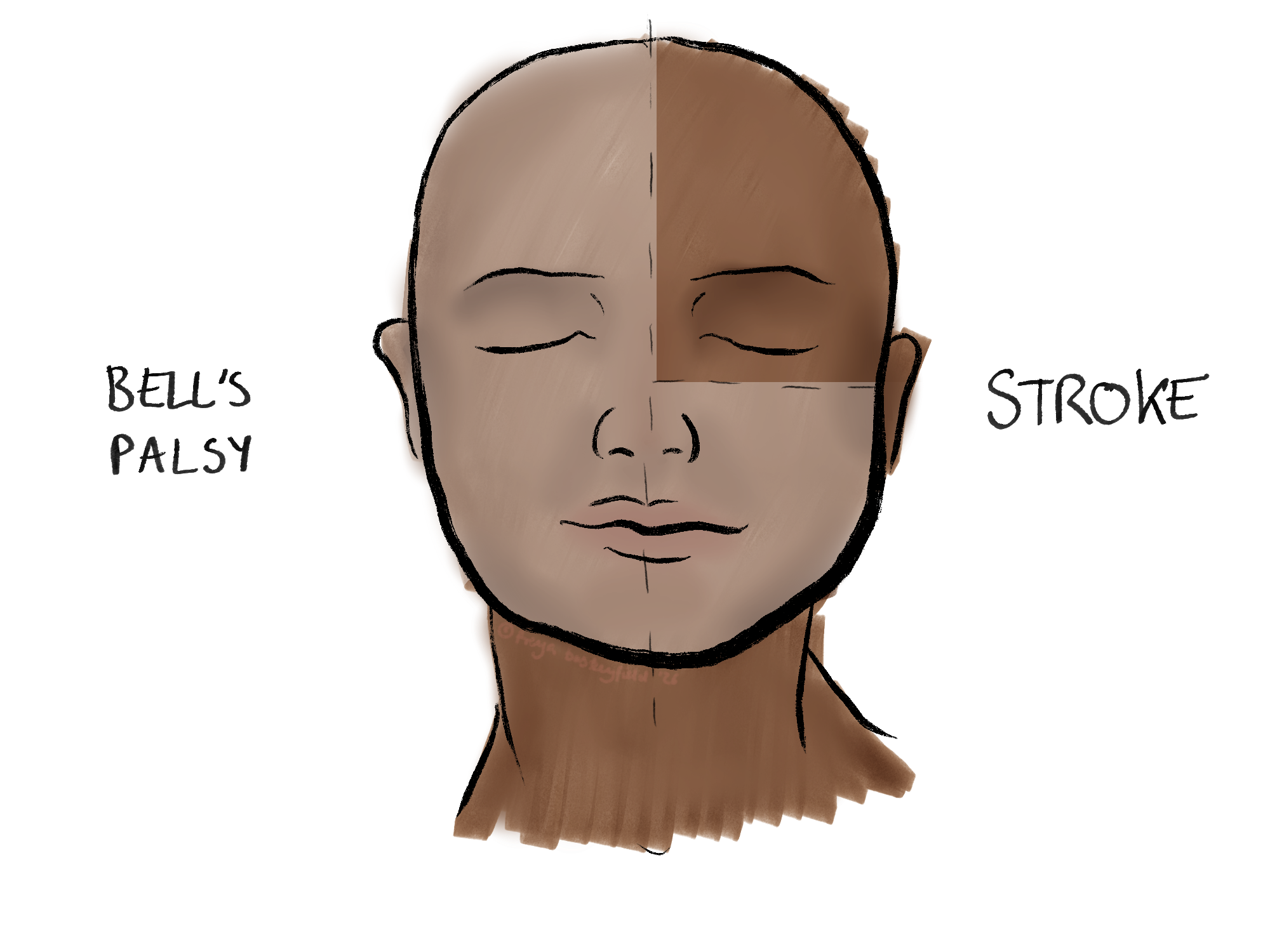
The two conditions can look similar, but they have very different causes and require different management. If someone develops sudden facial weakness, it should always be taken seriously and investigated immediately.
What Is Bell’s Palsy?
Bell’s palsy is caused by irritation or inflammation of the facial nerve, possibly following a viral infection. This nerve controls the muscles responsible for facial expression, including smiling, closing the eye, and raising the eyebrows. When the nerve is compromised, the muscles on one side of the face become weak.
Symptoms usually develop over a few hours, although some people notice changes more gradually. Common features include:
one side of the face appearing to droop
difficulty smiling or moving the mouth on one side
difficulty closing one eye
changes to taste
increased sensitivity to sound
a dry eye on the affected side
difficulty raising one eyebrow
How Is This Different From a Stroke?
A stroke happens when blood supply to part of the brain is interrupted, either because of a blockage or a bleed. Because the brain controls movement throughout the body, symptoms often extend beyond the face.
A key difference is that stroke-related facial weakness often affects the lower half of the face, while forehead movement may be preserved. This is because the part of the brain controlling the forehead receives signals from both sides.
The main warning signs of a stroke are summarised as the FAST test:
F – Face: Facial dropping
A – Arms: Difficulty raising both arms
S – Speech: Speech slurring or otherwise affected
T – Time: Call 999 immediately if any of these signs are present.
A stroke is a medical emergency. If there is any doubt, urgent assessment is always the safest option.
How Osteopathy Can Support Recovery
Once a stroke has been medically managed, rehabilitation is an important part of recovery. Depending on the effects of the stroke, this may involve physiotherapy, occupational therapy, and other specialist input.
Osteopathy may provide additional support by addressing some of the musculoskeletal changes that can develop afterwards. For example, weakness on one side of the body may alter posture, movement patterns, and the way muscles work together. Over time, this can contribute to neck and shoulder pain, headaches, or stiffness.
With Bell’s palsy, the main recovery process involves allowing the facial nerve to heal. Many cases improve on their own over weeks to months, although recovery time varies.
Again, osteopathy may help with associated symptoms. Changes in facial movement can sometimes lead to increased tension through the jaw, neck, and upper back as the body adapts. Gentle treatment and movement advice may help improve comfort while recovery takes place.
Looking at the Whole Picture
Whether facial weakness is caused by Bell’s palsy, stroke, or another condition, accurate diagnosis comes first. Sudden symptoms should always be checked by a medical professional.
Once serious causes have been ruled out, rehabilitation focuses on helping you regain confidence and function. Your osteopath will take a whole-body approach, assessing how changes in one area may influence the rest of the body and providing treatment tailored to your individual needs.