Digestion
Although we do see a lot of back pain, sciatica, and sports injuries, Osteopaths are also qualified to help with some digestive issues.
Reflux
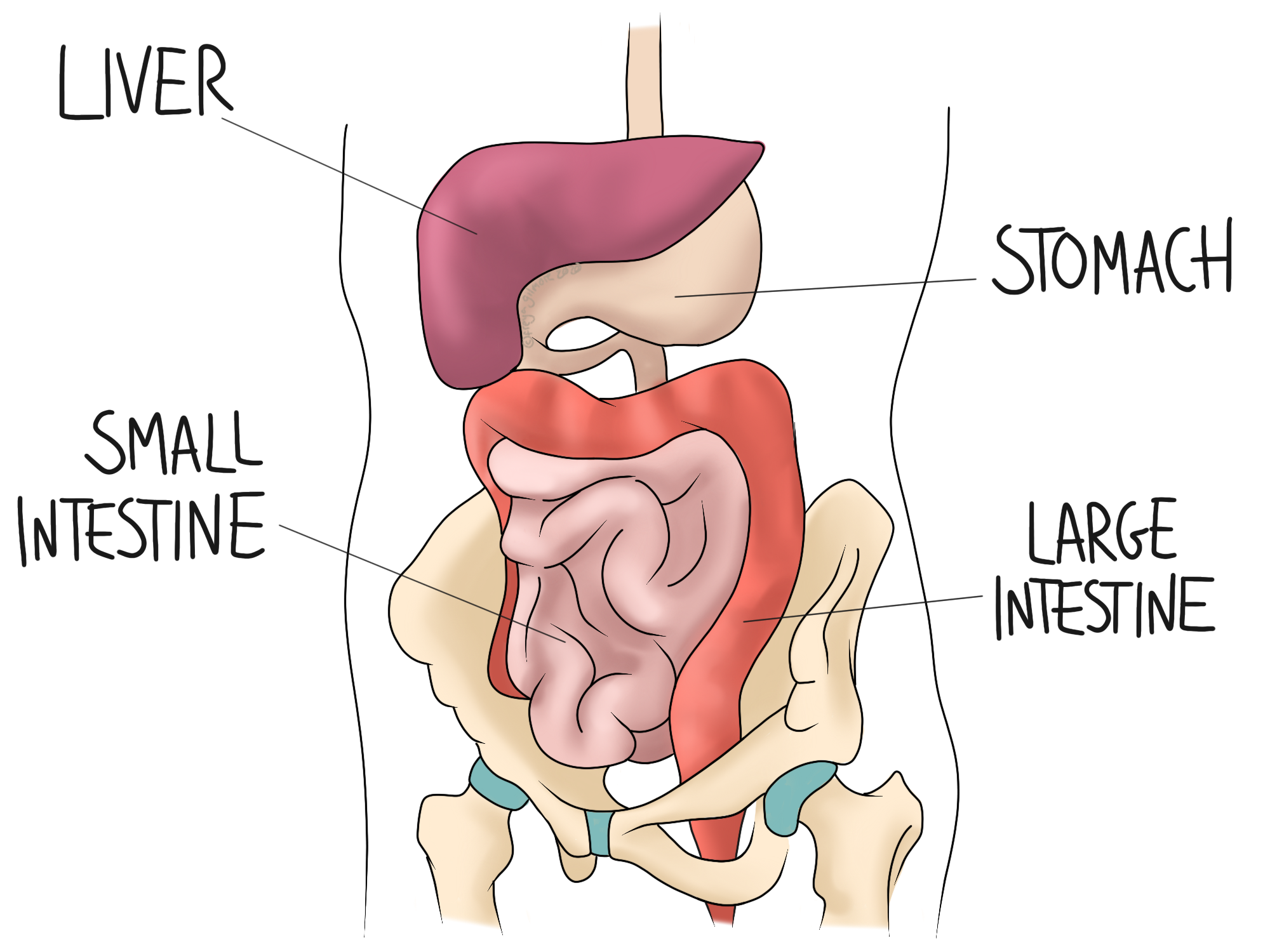
We’ve spoken before about infant reflux, and how the diaphragm in particular plays a role in this. In brief, reflux occurs when stomach contents creeps back up into the oesophagus. The sphincter at the top of the stomach should prevent this, but sometimes it is unable to. A well-functioning diaphragm supports the sphincter, as the base of the oesophagus passes through the diaphragm.
If you’re stressed, hold a lot of tension in your upper body, or breathe from your shoulders rather than your tummy, the diaphragm might not work as well as it could. If the stomach sphincter did need help, and it’s no longer getting it, you might develop reflux. The diaphragm is just a sheet of muscle, and your osteopath has techniques and exercises available to address that tension.
Irritable Bowel Syndrome (IBS)
IBS is poorly understood, but is classified as a “functional” disease. This means it won’t show any positives on tests like blood tests or scans. Rather, it’s the absence of other conditions that helps to build the diagnosis.
It can be characterised by constipation, diarrhoea, bloating, and gas, among other symptoms. Stress often aggravates symptoms, and keeping a diary can be key to identifying food or drink that might trigger you. Frustratingly, symptoms may not follow any discernible pattern for you. Where tension is involved, your osteopath may be able to help. Working around the abdomen and nearby structures could be worth a try to encourage areas of tension to relax and identify any weakness that may respond to exercise. One study found that spinal manipulation could also help with symptoms, if appropriate.
Osteopaths can also help with managing Fibromyalgia, of which IBS can be a symptom.
In the Other Direction: Digestion Influencing Pain
When you have abdominal pain, you might take on a protective posture. Often this will look like a flexed position, crunching over the abdomen. It might also come with forward shoulders. These two main changes can have a wide reaching effect:
upper X pattern of tension and weakness
compensation with hyperextension of the neck
tension in the quadriceps
loss of hip extension
Often, the digestive symptoms will relate back to a problem that is out of our remit, but we may still be able to help with their knock-on effects. Where there is tension, we aim to relax, and where there is weakness, we work to strengthen. We also look beyond the immediately symptomatic area to find other issues that may have an impact on your symptoms (or be affected by the initial issue).
You can expect a combination of stretching techniques, and techniques to improve joint mobility. Lifestyle or ergonomic advice, alongside personalised exercises are standard “homework” from your sessions. The more you can do to help yourself between appointments, the better your prognosis.
Click here to make an appointment for your digestive symptoms in Flitwick