
Meniscus Tears
The meniscus is a piece of cartilage inside the knee that helps with shock absorption, stability, and smooth movement. Each knee has two menisci: one on the inside (medial) and one on the outside (lateral). When people talk about “torn cartilage” in the knee, they are usually referring to a meniscus tear.
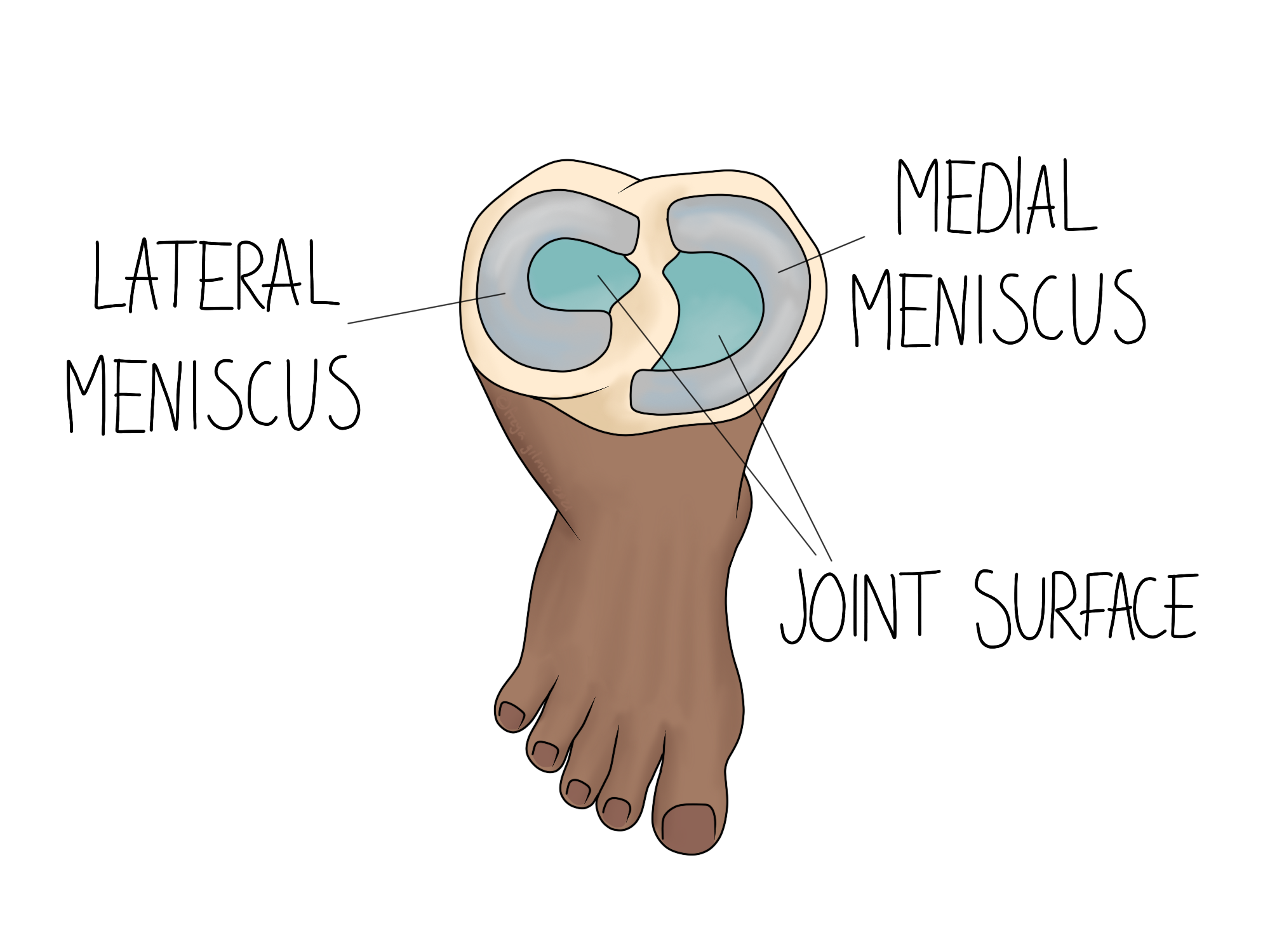
Meniscus injuries are common in both sporty and non-sporty people. Some happen suddenly after an injury, while others develop gradually over time as the tissue becomes weaker with age.
How Meniscus Tears Happen
In younger patients, meniscus tears often happen during sport or sudden twisting movements. Football, rugby, skiing, and tennis are common culprits. A planted foot with a twist through the knee is a classic mechanism of injury. You may feel a sharp pain, sometimes with a pop, followed by swelling or difficulty fully straightening the knee.
In older adults, tears are often more gradual and degenerative. The cartilage becomes less resilient over time, and something as simple as squatting, gardening, or stepping awkwardly can be enough to trigger symptoms. In these cases, there may not be one clear injury to remember. Some tears heal well with conservative management, while others (particularly those causing locking or significant instability) may need orthopaedic review.
Symptoms of a Meniscus Tear
Symptoms vary depending on the size and type of tear, but commonly include:
pain along the joint line of the knee
swelling
clicking or catching sensations
difficulty squatting or twisting
stiffness after rest
a feeling that the knee may give way
Some people describe the knee as feeling “not quite right” rather than severely painful.
Adapting Sport and Exercise
Resting completely is not always the best answer, but continuing to push through pain can delay healing. Sport often needs to be modified temporarily.
Twisting, pivoting, deep squatting, and impact-heavy exercise are usually the biggest aggravators. Running may need to be reduced or replaced with lower-impact exercise like cycling, swimming, or controlled gym work while symptoms settle.
This does not mean stopping everything—it means finding the right level of loading that allows healing without repeated irritation.
Osteopathy for Meniscus Tears
Your osteopath will assess not only the knee itself, but also how the hip, ankle, and pelvis are contributing to load through the joint. Restricted movement elsewhere can place extra demand on the knee and slow recovery.
Treatment may involve:
improving movement in surrounding joints
reducing muscular tension in the thigh and calf
supporting swelling reduction and circulation
helping restore confidence in movement
guiding a safe return to exercise
If symptoms suggest a more serious tear, we may refer you back to your GP for further investigation.
Recovery and Rehabilitation
Healing depends on the type of tear, your age, and your activity levels. Rehabilitation focuses on restoring strength, stability, and confidence in the knee so that the problem does not keep returning.
If your knee pain is stopping you from walking comfortably, training properly, or trusting your knee again, an osteopathic assessment can help identify what is driving the issue and support your recovery.
Make an appointment here to assess your knee pain and start getting back to full movement.